
APRC Home Care

Physiotherapy

physiotherapy

home visit physiotherapist in Delhi
Physiotherapy

Post-Operative Rehabilitation at Home: Benefits, Process, and Selection Tips

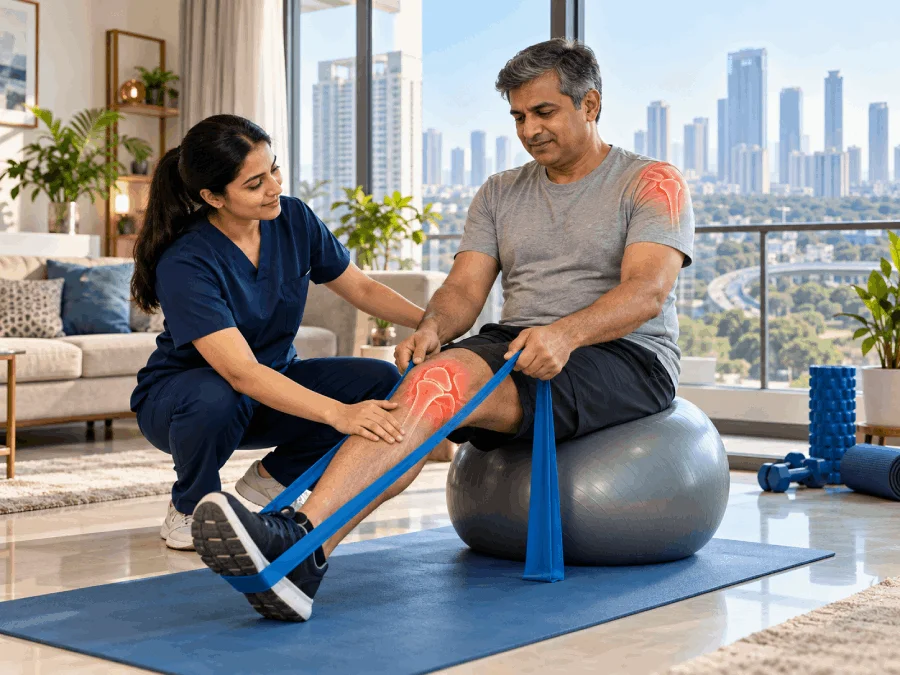
Travelling to a clinic after surgery can be difficult when every movement requires extra effort. For patients recovering from knee or hip replacement, spinal surgery, fracture repair, or other orthopaedic procedures, choosing the best physiotherapist for regular home-based care can make rehabilitation more convenient and consistent. This guide explains what patients and caregivers should look for before they visit a physiotherapist or arrange a home physiotherapy service, including therapist credentials, personalised treatment, scheduling, progress monitoring, and the advantages of receiving rehabilitation at home. Why Post-Surgery Patients May Need Physiotherapy at Home After surgery, patients may experience stiffness, reduced strength, limited movement, difficulty walking, or problems with balance. Travelling repeatedly to a clinic can become another practical challenge, particularly for elderly patients or those who need assistance from family members. With post-surgery physiotherapy at home, the therapist can provide treatment in the patient’s familiar surroundings. This can be especially useful when getting into a car, using stairs, or waiting at a clinic is uncomfortable or difficult. For example, someone recovering from knee replacement may need regular exercises to improve movement and strength. A home visit allows the physiotherapist to work around the patient’s actual living environment while considering their current mobility. How to Choose the Best Physiotherapist for Home Visits Selecting a physiotherapist should involve more than simply searching for a “physiotherapist near me for home visit.” Patients and caregivers should consider the following factors. 1. Check Professional Qualifications and Registration The therapist’s educational qualifications and professional registration should be verified before treatment begins. This can give patients greater clarity about who is providing their rehabilitation. APRC Home Care works with qualified physiotherapists, including RCI-registered therapists, where applicable to the service and professional role. Patients should always confirm the therapist’s credentials and scope of practice when arranging care. 2. Look for Experience Relevant to the Patient’s Condition Post-surgery rehabilitation is not identical for every patient. Recovery requirements may differ after knee replacement, hip replacement, spinal surgery, fracture repair, or another orthopaedic procedure. A suitable therapist should understand the patient’s surgical history, current limitations, doctor’s recommendations, and rehabilitation goals before developing an exercise programme. Patients looking for experienced physiotherapist at home should therefore ask whether the therapist has experience managing the type of recovery involved. 3. Choose Personalised Treatment Instead of Generic Exercises A common concern with rushed physiotherapy visits is receiving a standard set of exercises without sufficient attention to individual needs. A personalised treatment plan may consider: This approach helps make each session relevant to the patient’s current stage of recovery. The Benefits of Post-Surgery Physiotherapy at Home For patients who find clinic visits challenging, home-based rehabilitation can address several practical problems. No Travel Required Patients do not have to arrange transportation for every session. This can reduce the logistical burden on family members and caregivers. Those specifically looking for home visit physiotherapist in Delhi can explore home-based treatment options according to their location and requirements. Flexible Scheduling Working professionals may need early morning, evening, or weekend appointments, while elderly patients may prefer sessions around their daily routine. Flexible scheduling can make it easier to maintain regular physiotherapy instead of frequently postponing appointments. Comfort and Privacy of Home Some patients feel more comfortable receiving treatment in a familiar environment. Home sessions can also be practical for people who have difficulty navigating busy clinic environments. Better Continuity of Care Consistency matters during rehabilitation. When sessions are easier to attend, patients may find it simpler to follow their prescribed treatment routine. Family members can also understand the exercises and precautions being followed, where appropriate, making it easier to support the patient’s recovery between sessions. What Happens During a Home Physiotherapy Session? A typical home visit may begin with an assessment of the patient’s current condition and mobility. The physiotherapist can then work through appropriate exercises and therapeutic techniques based on the treatment plan. Depending on the patient’s needs and clinical recommendations, sessions may include: Some patients may also require equipment-based treatment. When appropriate, a portable physiotherapy machine can make certain forms of treatment more practical during a home visit. The specific treatment should always be determined by the physiotherapist after considering the patient’s condition and medical instructions. Progress Tracking Should Be Part of the Process One of the concerns patients may have with inconsistent treatment is not knowing whether rehabilitation is progressing. A structured physiotherapy service should involve regular observation of functional changes. Depending on the patient’s condition, the therapist may monitor aspects such as movement, strength, walking ability, balance, and performance of daily activities. For a post-surgery patient, progress may involve small but meaningful milestones—for example, moving more comfortably, standing with greater confidence, or performing prescribed exercises with better control. Patients and caregivers can discuss these changes with the therapist and understand whether the treatment plan needs adjustment. When Should Someone Visit a Physiotherapist After Surgery? The appropriate timing depends on the type of surgery, medical condition, and instructions from the treating doctor or surgeon. Physiotherapy should not be started, stopped, or intensified without considering relevant post-operative precautions. A physiotherapist may be particularly helpful when a patient experiences ongoing difficulty with: For patients who cannot conveniently travel, post-surgery rehabilitation at home can provide an alternative setting for supervised rehabilitation. How Home Physiotherapy Helps Families and Caregivers Arranging transportation, accompanying a parent to appointments, managing clinic schedules, and ensuring exercises are followed can place considerable pressure on caregivers. Home physiotherapy can simplify some of these responsibilities because treatment takes place at home. Caregivers can also communicate directly with the therapist about practical concerns related to mobility and daily activities. This can be particularly useful for elderly patients or individuals who depend on family members for transportation. Choosing a Physiotherapy Service That Fits the Patient’s Routine The best physiotherapy at home is not necessarily about finding the most convenient appointment alone. Patients should consider professional qualifications, relevant experience, personalised treatment, scheduling flexibility, communication, and ongoing progress monitoring. For someone recovering from surgery, these factors can make home rehabilitation easier to organise and

, , , , , , ,

Post-Operative Rehabilitation at Home: Benefits, Process, and Selection Tips Read Post »

Physiotherapy for Golf Club
Physiotherapy

Physiotherapy for Golf: Relieve Pain, Restore Mobility, and Play Without Limits

By Dr. Ravinder Kumar, Physiotherapist — Golf Injury & Rehabilitation Specialist For many amateur and senior golfers, the game itself is rarely the problem — the pain that follows is. A stiff lower back after eighteen holes, a nagging ache in the elbow that won’t settle, or a shoulder that no longer rotates the way it used to can quietly turn a favourite pastime into a source of frustration. Physiotherapy for Golf Club members and casual players alike offers a structured, non-surgical path back to comfortable, consistent play. This article explains the most common golf-related injuries, how targeted physiotherapy addresses them, and why receiving that care at home — rather than commuting to a clinic — can make recovery more consistent and far less disruptive. Why Golfers Are Prone to Injury Golf looks low-impact, but the swing places significant, repetitive stress on the spine, elbows, shoulders, wrists, and hips. A single round involves dozens of forceful rotations, and over months or years, that repetition adds up. Physiotherapy for Golf is not only about treating injury after it happens — it is equally about correcting the movement patterns that caused it in the first place. Common Conditions Golfers Experience Left unaddressed, these issues rarely resolve on their own. They tend to resurface every time a golfer returns to the course, which is why a proper rehabilitation plan matters more than temporary rest. Understanding the Root Cause: Golf Swing Biomechanics A golf swing is a coordinated chain of movement, and pain in one area often originates elsewhere. Golf swing biomechanics explain why, for example, restricted hip rotation frequently shows up as lower back strain — the body compensates by over-rotating through the spine instead of the hips. This is where a trained eye matters. Rather than treating symptoms in isolation, sports physiotherapy for golfers looks at the entire swing sequence to identify what’s actually driving the discomfort. How Physiotherapy Addresses Golfer-Specific Pain Low Back Pain and Core Stability Golf-related low back pain is typically managed through a combination of gentle mobility work and rotational core stability training. Anti-rotation exercises, controlled stretching, and gradual strengthening help the spine handle the swing’s demands without overloading it. A golf back pain relief plan is built around the golfer’s specific limitations, not a generic protocol. Golfer’s Elbow Recovery Recovery from golfer’s elbow usually combines rest from aggravating movements with structured golfer’s elbow exercises at home, followed by a gradual return to swinging. A golf elbow pain treatment plan typically progresses from reducing inflammation to rebuilding grip and forearm strength, minimising the chance of recurrence. Shoulder and Wrist Care Shoulder pain from golf swing mechanics often responds well to scapular strengthening and controlled range-of-motion work. Wrist discomfort is addressed similarly — through targeted loading exercises that restore strength without irritating the joint further. Hip Mobility and Rotational Function Because the hips initiate much of the swing’s power, restoring hip rotation/mobility for golf is central to nearly every golf rehabilitation plan. Improved hip mobility for golfers not only reduces pain but often improves swing consistency as a secondary benefit. Thoracic Spine and Whole-Body Coordination Thoracic spine mobility is another frequently overlooked contributor to golf injuries. When the mid-back cannot rotate sufficiently, the lower back and shoulders absorb the extra load — a pattern a golf specific rehabilitation plan is designed to correct. A Golfer Rehabilitation Program Built Around Real Life A structured golfer rehabilitation program typically includes: This is not a one-size-fits-all checklist. Golf injury recovery time varies by individual, and a sound plan reflects that. Why Home-Based Physiotherapy Suits Golfers Best For many golfers — particularly senior players managing arthritis or other age-related conditions, and busy amateurs fitting recovery around work and weekend rounds — travelling to a clinic repeatedly is itself a barrier to consistent care. Rigid clinic timings, generic and rushed sessions, and uncertainty about a therapist’s credentials only add to the frustration of already being in pain. Receiving physiotherapy for golf at home addresses each of these concerns directly: For families researching care on behalf of an older parent or spouse, this also removes much of the logistical burden of arranging transport and coordinating appointments. Getting Back to the Course, Properly Persistent pain does not have to mean giving up golf. With the right combination of assessment, a tailored golf injury physiotherapist-led plan, and consistent follow-through, most golfers can return to the course with better mobility and fewer setbacks than before. Whether the goal is golf swing pain relief for an existing injury or a proactive plan to support physio for golf performance, professional guidance delivered where it’s most convenient — at home — offers a practical way to stay consistent with recovery. Ready to address your golf-related pain without the hassle of clinic visits? Call APRC Homecare to arrange a personalised at-home physiotherapy assessment with a certified, RCI-registered therapist.

, , , , , , ,

Physiotherapy for Golf: Relieve Pain, Restore Mobility, and Play Without Limits Read Post »

physiotherapy for sciatica, pediatric care
Physiotherapy

From Sciatica to Pediatric Care: A Guide to Physiotherapy at Home

Booking a physiotherapy session shouldn’t come with more questions than answers — what will it cost, is the therapist actually qualified, can someone come today if the pain is bad enough. These are the questions people are usually trying to answer before they’ll commit to anything. This article works through the practical side of physiotherapy at home — what it costs, which conditions it covers, and where treatments like chiropractic care, dry needling, and cupping therapy fit into the picture. Why the Cost Question Comes First Before anything else, most people want to know: how much is this actually going to cost? It’s a fair question, and one that often goes unanswered until well into a phone call or booking process. Charges for physiotherapy at home vary depending on the condition being treated, the frequency of sessions, and whether additional therapies like dry needling or cupping are included. What matters most for a first-time patient is transparency — knowing the cost structure upfront, rather than discovering it session by session. [NEEDS SOURCE: exact pricing figures aren’t included here, as none were provided.] Sciatica Treatment at Home Sciatica tends to catch people off guard — a dull ache that turns into sharp, radiating pain down the leg, often after a long day at a desk. For working professionals with prolonged sitting, and for middle-aged adults managing early-stage disc issues, sciatica treatment exercises at home offer a way to manage symptoms without waiting for the next available clinic slot. The advantage of treating sciatica at home isn’t just convenience. It’s consistency — the same therapist, tracking the same symptoms, adjusting exercises as the condition responds. That kind of continuity is difficult to replicate across rotating clinic appointments. Chiropractic Care Without the Clinic Visit For patients managing chronic back or neck pain, spinal adjustment is often part of the treatment plan — but getting to a clinic regularly isn’t always realistic. A chiropractor at home addresses this directly, particularly for: Bringing this care into the home setting removes one of the biggest barriers to consistent treatment: simply getting there. Dry Needling as an Add-On Therapy Dry needling at home is often sought out by patients who’ve already tried conventional physiotherapy and are looking for something more targeted — particularly for muscle knots and trigger points that haven’t responded to stretching or massage alone. For patients already undergoing physiotherapy, adding dry needling into an existing home care plan means one therapist managing the full treatment picture, rather than coordinating between separate providers. When Physiotherapy Can’t Wait Some situations don’t allow for a scheduled appointment days out. An emergency physiotherapy visit is relevant for patients discharged from hospital who need urgent follow-up care, or anyone experiencing a sudden flare-up that limits movement significantly. In these cases, rigid clinic timings become more than an inconvenience — they can genuinely delay recovery at the point it matters most. Pediatric Physiotherapy: A Different Kind of Care Children don’t respond to treatment the way adults do, and a clinical setting can sometimes make things harder rather than easier. Pediatric physiotherapy at home is built around this reality, offering a familiar, low-stress environment for: Parents coordinating this kind of care often carry a significant logistical load — appointments, transport, keeping a child calm through unfamiliar settings. A physiotherapy at home visit removes several of these obstacles at once. Cupping Therapy as a Complementary Option For patients seeking alternative or complementary approaches alongside conventional treatment, cupping therapy at home is increasingly requested as part of a broader recovery plan. It’s rarely used in isolation — more often, it’s combined with physiotherapy sessions as part of a more holistic approach to pain relief and muscle recovery. What a Home Physiotherapy Visit Should Actually Deliver Regardless of the specific condition, a well-structured physiotherapy at home visit should offer: Making an Informed Decision Whether the need is sciatica management, chiropractic support, pediatric care, or an urgent visit that can’t wait for a clinic slot, the underlying priorities are usually the same: clear pricing, qualified therapists, and treatment that doesn’t stall due to logistics. Home-based physiotherapy is built to address exactly these concerns. Anyone looking to understand pricing, discuss a specific condition, or book a physiotherapy at home visit can get in touch to arrange an initial consultation.

, , , , , , , ,

From Sciatica to Pediatric Care: A Guide to Physiotherapy at Home Read Post »

physiotherapy at home visit
Physiotherapy

Home Physiotherapy Visit in Jaypee Greens, ATS Dolce & ATS Paradiso

Getting to a physiotherapy clinic sounds simple enough — until you’re the one doing it three times a week with a bad knee, a newborn at home, or an elderly parent who can barely make it down the stairs. For many residents of Jaypee Greens, ATS Dolce, and ATS Paradiso, that’s exactly the problem. A physiotherapy at home visit solves it by bringing the therapist to you, instead of the other way around. This piece walks through what home-based physiotherapy actually looks like in these societies, who tends to benefit most, and what to keep in mind before booking a session. Why the Clinic Isn’t Always the Right Answer Clinics work fine for some people. For others, they’re a quiet source of stress. Traffic, parking, waiting rooms, appointment slots that never quite fit the day — it adds up. Think about an elderly resident with limited mobility. A short trip to a clinic can turn into a whole production: someone has to drive them, help them in and out of the car, wait around, then do it all again on the way back. Post-surgical patients often shouldn’t be making that trip at all. And professionals working long hours frequently find that clinic timings simply don’t line up with theirs. The result, more often than not, is inconsistent treatment. Sessions get pushed, skipped, rescheduled — and physiotherapy is one of those things where consistency matters almost as much as the quality of the session itself. What’s Actually Different About Home-Based Physiotherapy It’s not just a clinic session that happens to take place at home. The setting changes the treatment itself. The Sessions Feel Less Rushed, More Personal At home, a therapist can actually watch how someone moves through their own space — how they get up from their favorite chair, how they manage the stairs, whether the bathroom layout is a fall risk. That context shapes a genuinely personalized treatment plan, rather than a generic set of exercises handed out on a printed sheet. There’s also usually more breathing room in the session itself, without the clock-watching feel of a busy clinic floor. There’s Something to Be Said for Healing at Home Recovering somewhere familiar, without other patients around or the general noise of a clinic, tends to help people relax into the process. This matters a lot for new mothers doing post-natal physiotherapy, for stroke patients working through rehabilitation, or honestly, for anyone who’d just rather not do their exercises in front of strangers. Scheduling Bends Around Your Life, Not the Other Way Around Home visits can usually be arranged around whatever routine already exists — early mornings before work, evenings once the kids are settled, whenever it actually works. That flexibility matters a great deal for caregivers already stretched thin, or for anyone whose week doesn’t fit neatly into a 9-to-5 clinic schedule. Who Tends to Reach Out for This The residents who look into home physiotherapy across Jaypee Greens, ATS Dolce, and ATS Paradiso come from fairly different situations, but a few patterns show up again and again: Each of these comes with its own set of constraints, which is part of why a single, standardized clinic model doesn’t always serve everyone well. A Reasonable Question: Who’s Actually Showing Up at the Door? It’s a fair question, and most families ask it. Letting a stranger into your home for medical care is a different kind of decision than walking into a clinic. Reliable Physiotherapy Home services typically work with certified, RCI-registered therapists — professionals who meet recognized clinical standards, not just anyone with a background in fitness. Families arranging care for a parent should feel comfortable asking to see credentials upfront. A service with nothing to hide will usually be glad to share them. The other concern that comes up almost as often is progress — or the lack of visibility into it. Without some kind of tracking, it’s genuinely hard to know if things are improving or just staying the same. Better home care programs build in regular progress checks, so patients and families aren’t left guessing whether the sessions are actually working. How a Session Usually Unfolds Every case is different, but most home physiotherapy sessions follow a rough structure: Nothing about this is rigid. The plan is meant to move with the patient, not force the patient to fit a template. Finding the Right Fit for Your Society Not every provider is equally familiar with the practicalities of gated communities — visitor entry, security check-ins, timing coordination with front desks. It helps to look for a service that already understands this. Someone searching for the Best physiotherapy at home visit experience should specifically ask whether the provider has worked within these societies before, since that familiarity tends to make the whole process smoother. Residents looking into Physiotherapy at home in ATS Dolce or Physiotherapy at home in ATS paradiso will generally find things easier with a provider already active in the community — fewer logistical surprises, quicker scheduling. Anyone exploring Physiotherapy at home in Jaypee Green should ask directly about availability and typical response times before committing to a first session. A Final Word Recovery rarely follows a straight line, and it tends to go better when treatment fits into daily life instead of constantly interrupting it. For residents of Jaypee Greens, ATS Dolce, and ATS Paradiso, home-based physiotherapy offers a genuinely practical alternative to the usual clinic routine — one built around consistency, real personalization, and simply not having to leave home to get better. If this sounds like something worth exploring, the next step is a conversation. Reach out and ask about the Physiotherapy Home services available in your community — it’s a reasonable, low-pressure way to start figuring out what recovery could look like without the commute.

, , , , ,

Home Physiotherapy Visit in Jaypee Greens, ATS Dolce & ATS Paradiso Read Post »

physiotherapist for back pain near me
Physiotherapy

How Physiotherapy Can Support Back Pain Recovery at Home

When Back Pain makes travelling to a clinic uncomfortable, maintaining regular treatment can become another challenge. Home-based physiotherapy offers a practical alternative for people who need structured rehabilitation but find clinic visits difficult because of mobility limitations, work commitments, caregiving responsibilities or rigid appointment timings. This guide explains how personalised home physiotherapy may support people with back-related conditions, what treatment can involve, and how consistent care can make rehabilitation easier to manage. Physiotherapy for Back Pain: A Personalised Approach Back pain does not affect every person in the same way. A working professional may experience discomfort after prolonged desk work, while an older adult may have mobility difficulties associated with age-related spinal changes. Someone diagnosed with a disc bulge or sciatica may require a different rehabilitation approach altogether. For this reason, physiotherapy should begin with an assessment rather than a generic exercise routine. A physiotherapist can consider the individual’s symptoms, movement limitations, medical history and daily activities before developing a suitable treatment plan. A personalised approach may include: Why Choose Home Physiotherapy for Back Pain? For many patients, the biggest obstacle is not treatment itself but getting to the clinic consistently. Sitting in a vehicle, arranging transport or depending on a family member can be difficult when movement is already restricted. Physiotherapy at home for Back Pain brings rehabilitation into the patient’s home environment and can make regular sessions more manageable. Key practical benefits include: No Travel Required Patients do not need to arrange repeated journeys to a clinic. This can be particularly useful for elderly individuals, post-surgery patients and people experiencing considerable difficulty with movement. Flexible Scheduling Working professionals with desk jobs may struggle with fixed clinic timings. Flexible home appointments can make it easier to fit rehabilitation around employment and family responsibilities. Personalised Treatment Instead of relying on a standard routine, the physiotherapist can adapt the programme according to the individual’s condition, physical ability and rehabilitation goals. Comfort and Privacy Some patients are more comfortable discussing their difficulties and performing exercises in familiar surroundings. Home sessions can also make rehabilitation easier for family members or caregivers to observe when their involvement is needed. Progress Tracking Regular assessment can help the physiotherapist monitor changes in movement, exercise tolerance and functional ability. The programme can then be adjusted as the patient’s needs change. Posture Correction Physiotherapy for Desk-Related Back Strain Long periods at a desk can place considerable demands on the back, particularly when a person’s working setup or movement habits are not suitable for them. Posture correction physiotherapy can focus on helping patients understand better movement patterns and strengthening or mobility exercises appropriate to their needs. For example, a professional who spends several hours working on a computer may receive guidance on sitting habits, movement breaks and exercises that can be incorporated into their daily routine. The aim is not simply to tell the patient to “sit straight.” A physiotherapist can assess how the person moves and identify practical changes that are appropriate for their situation. Supporting Patients With Disc Bulge, Slip Disc and Sciatica People diagnosed with a disc bulge, herniated disc or sciatica may require carefully selected rehabilitation rather than unsupervised exercises. Depending on the assessment and medical advice, physiotherapy may form part of a broader conservative treatment plan. Disc bulge treatment through physiotherapy may involve exercises and movement strategies designed around the patient’s symptoms and functional limitations. Similarly, sciatica physiotherapy at home can be considered for patients who have already received appropriate assessment and require rehabilitation support in a home setting. Non-Surgical Slip Disc Treatment Some patients specifically look for non-surgical slip disc treatment because they want to explore conservative management options. Whether non-surgical care is appropriate depends on the individual’s diagnosis, symptoms and medical advice. Physiotherapy may be included in a conservative rehabilitation programme where clinically appropriate. It should not, however, be presented as a substitute for medical evaluation when symptoms are severe, worsening or associated with concerning neurological changes. Back Pain Rehabilitation Exercises Should Be Individualised Exercises found online may not be suitable for every person with back pain. An exercise that is appropriate for one patient may be unsuitable for another depending on the underlying condition, symptoms and physical capacity. A physiotherapist can demonstrate appropriate back pain rehabilitation exercises, explain correct technique and monitor how the patient responds. The programme can then be progressed or modified according to individual needs. This can be especially valuable for people recovering after spinal procedures, where rehabilitation needs to follow the treating medical team’s recommendations. Pain Management Physiotherapy at Home Persistent discomfort can affect sleep, work, mobility and everyday independence. Patients may also become less active because they are concerned that movement will worsen their symptoms. Pain management physiotherapy at home can focus on helping the patient understand safe movement, improve physical function and gradually participate in appropriate activities. Treatment should be based on an individual assessment rather than a fixed programme. For chronic conditions, consistency can be particularly important from a practical perspective. Home sessions may help remove some of the barriers that cause patients to miss appointments or discontinue rehabilitation. Choosing a Qualified Physiotherapy Provider Uncertainty about therapist credentials is a common concern when arranging healthcare at home. Patients and families should be able to understand who will provide the treatment and whether the professional has appropriate qualifications and experience for the patient’s needs. APRC Home Care provides access to certified, RCI-registered therapists, helping patients make an informed decision about home-based care. Patients should also look for a service that provides: When Home Physiotherapy May Be Especially Convenient Home-based treatment can be particularly practical for: For caregivers, avoiding repeated clinic journeys can also reduce the logistical burden of arranging transport and accompanying the patient. Take the Next Step Towards Structured Back Pain Care Back pain rehabilitation can be easier to manage when treatment fits into the patient’s routine rather than creating additional travel and scheduling difficulties. Personalised physiotherapy, flexible appointments, qualified therapists and ongoing progress tracking can provide a more structured approach to home-based

, ,

How Physiotherapy Can Support Back Pain Recovery at Home Read Post »

physiotherapy at home for elderly patients
Physiotherapy

Helping Aging Parents Heal: The Case for Home Physiotherapy

Watching a parent struggle to get out of a chair, wince while climbing stairs, or hesitate before a clinic visit brings a particular kind of worry — one that’s hard to explain to anyone who hasn’t experienced it. For many adult children, the question isn’t whether their aging parent needs physiotherapy. It’s how to get them consistent, quality care without turning every session into a logistical ordeal. This article looks at how physiotherapy at home for elderly patients works, why it often suits older patients better than clinic visits, and what families should know before choosing it. Why Clinic Visits Are Often Harder on Elderly Patients Than They Appear A clinic visit that seems routine on paper — a short drive, a waiting room, a session, the drive back — can be considerably more taxing for an elderly patient than it looks. Stairs, uneven pavements, long waits on hard chairs, and the general fatigue of travel all add strain to a body already dealing with pain or limited mobility. For patients recovering from a fall, a stroke, or joint surgery, this strain isn’t just uncomfortable. It can actively work against the goals of the treatment itself, undoing some of the progress made during the session before the patient even gets home. Common Situations Where This Becomes Especially Difficult What Home Physiotherapy for Elderly Patients Actually Involves Home-based physiotherapy shifts the entire equation. Instead of asking an already-fragile patient to travel, a certified therapist comes to them — assessing their condition, mobility, and pain levels in the environment where they’ll actually be doing their daily movements. This matters more than it might initially seem. A therapist working in a patient’s home can factor in real details — the height of a favorite armchair, the number of steps to the bathroom, the layout of a hallway — and build a treatment plan around them, rather than a generic routine disconnected from daily life. The First Visit: What Families Can Expect The initial session typically involves a detailed assessment covering the patient’s medical history, current mobility, pain points, and any recent diagnosis or doctor referral. From there, a personalized treatment plan takes shape — one built specifically around the patient’s condition rather than a standard protocol applied uniformly. For instance, an elderly patient recovering from a hip fracture may need a plan centered on safe transfers between bed and chair, while someone managing chronic arthritis pain might benefit more from a routine focused on joint mobility and gentle strengthening. Addressing the Concerns Families Commonly Have “How do we know the therapist is actually qualified?” This is often the first question families ask, and reasonably so — few things call for more trust than a stranger providing hands-on care to an aging parent. Confirming that the assigned therapist is certified and RCI-registered before the first visit helps resolve this concern early rather than leaving it unaddressed. “Can home-based treatment be as effective without clinic-grade equipment?” Therapists conducting home visits generally bring the portable equipment needed to carry out a full treatment plan, so the absence of a clinical setting doesn’t mean a compromise on the quality or scope of care. “How do we track whether it’s actually working?” Progress shouldn’t be a mystery, particularly for family members who may not be present for every session. Therapists typically reassess the patient’s condition over time, adjusting the treatment plan as mobility, strength, or pain levels change — and sharing that progress with family members helps ease the disconnect that often comes with coordinating care from a distance. Why Flexible Scheduling Matters More With Elderly Patients Clinics tend to operate on fixed hours that don’t always account for an elderly patient’s energy levels, medication schedules, or the availability of a family member to accompany them. Rigid appointment slots can quietly lead to missed sessions — and for a population where recovery already depends heavily on consistency, that inconsistency can slow progress considerably. Home visits can generally be scheduled with more flexibility, allowing sessions to align with the patient’s best hours of the day, rather than forcing the patient to adapt to a fixed clinic timetable. A Brief Scenario Consider a 72-year-old recovering from a stroke, whose family lives nearby but works full-time. Coordinating regular clinic visits — arranging transport, taking time off work, managing the physical strain on the parent — quickly becomes unsustainable. With home visits, therapy continues on a consistent schedule without requiring the family to restructure their week around it, and the parent avoids the added fatigue of travel altogether. What Families Can Expect Going Forward Choosing physiotherapy at home for elderly patients generally follows a straightforward process: Aging parents deserve care that doesn’t add stress to an already difficult recovery process. Home-based physiotherapy offers a way to provide consistent, personalized treatment without the physical toll of travel or the uncertainty that often comes with rushed clinic visits. For families weighing their options, reaching out for an initial consultation is typically the most practical first step — one that can make the difference between sporadic treatment and steady, well-supported recovery.

Helping Aging Parents Heal: The Case for Home Physiotherapy Read Post »

Physiotherapy at Home for neck pain
Physiotherapy

Is Physiotherapy at Home Worth It for Neck Pain?

A stiff, aching neck has a way of narrowing an entire day — turning to check a blind spot while driving, glancing down at a phone, or sitting through a long call all become small negotiations with discomfort. Before committing to any treatment plan, it’s fair to ask whether physiotherapy at home for neck pain actually delivers results, or whether it’s simply a more convenient version of the same clinic experience. This article looks at what physiotherapy at home for neck pain actually involves, how it compares to clinic-based care, and what should inform the decision — so it can be made with clarity rather than assumption. What “Worth It” Actually Means For someone weighing treatment options, “worth it” usually comes down to a few practical questions: Will the format support consistent treatment? Does it fit realistically into an existing schedule? And does it allow the therapist to understand the actual problem, not just address a symptom in isolation? Physiotherapy at home for neck pain is best evaluated against these same questions — not against a vague sense of “better” or “worse” than a clinic, but against what genuinely supports full recovery. How Home-Based Treatment Differs From Clinic Visits The core physiotherapy techniques — manual therapy, targeted exercises, mobility work — are largely the same whether delivered at home or in a clinic. What differs is the context and the logistics surrounding treatment. A therapist conducting a physiotherapy at home visit observes the patient’s actual environment: how a desk is positioned relative to a screen, how a pillow and mattress may be contributing to overnight stiffness, or how posture shifts during a long video call. This real-world context often shapes treatment more precisely than a generic clinic consultation would. A Practical Scenario Consider someone whose neck pain worsens by late afternoon after back-to-back video calls. A clinic visit would mean fitting an appointment around a demanding calendar and travel time — often the first thing to get pushed aside during a busy week. A home visit physiotherapist near me, by contrast, can assess the actual desk setup contributing to the strain and adjust treatment accordingly, without adding disruption to the day. What a Typical Session Involves A home physiotherapy service for neck pain generally includes an assessment of current mobility and pain levels, targeted exercises to relieve stiffness and rebuild range of motion, and practical guidance — posture adjustments during desk work, sleep positioning changes, or safer movement patterns for daily activities. Sessions typically build progressively, adjusting based on how the neck responds over successive visits. Understanding Physiotherapy at Home Charges Physiotherapy at home charges vary depending on session frequency, treatment complexity, and location. Rather than assuming home-based care carries a fixed premium over clinic visits, it’s worth requesting a clear cost breakdown directly from a provider, since pricing structures differ between practices. When Home-Based Physiotherapy Tends to Make Sense Home-based care tends to be a strong fit when: It may be less suited to cases requiring specialized clinical equipment that isn’t practical to bring into a home setting — a detail worth discussing directly with a physiotherapist for home visits before starting treatment. Beyond Neck Pain: A Broader Model of Care The same home-based approach extends well beyond neck pain. Patients searching for home physiotherapy services near me, physio to your home, or leg physiotherapy at home will typically find a similar model — care structured around the patient’s actual environment and schedule rather than a standardized clinic format. This also applies to patients seeking physiotherapy at home for elderly patients, where a familiar, comfortable setting and consistent care from the same therapist often play a meaningful role in maintaining mobility and confidence over time. Making the Decision Ultimately, whether physiotherapy at home for neck pain is “worth it” depends less on the treatment techniques themselves — which are broadly consistent with clinic-based care — and more on which format a patient will actually follow through with consistently. For many balancing demanding schedules, the reduced friction of a physiotherapy at home visit is what turns a treatment plan from theoretical to actionable. Moving Forward With Confidence Choosing a treatment format comes down to a simple, practical question: which approach will actually get followed through, session after session? For many patients managing neck pain alongside a full calendar, physiotherapy at home offers a way to stay consistent with recovery without the added friction of travel and rigid scheduling. For those exploring this option, APRC Home Care provides physiotherapy at home for neck pain, along with related services for elderly patients and other conditions, each structured around individual needs, patient’s environment and pace. Learn more or book a consultation at https://aprchomecare.com.

, , , ,

Is Physiotherapy at Home Worth It for Neck Pain? Read Post »

physiotherapy at home for knee pain
Physiotherapy

Is Physiotherapy at Home Worth It for Knee Pain?

Knee pain has a way of quietly reshaping a routine — skipping the stairs when possible, avoiding certain movements during a workout, or rescheduling a trip because sitting through a long flight feels daunting. Before committing to a treatment plan, it’s fair to ask whether physiotherapy at home for knee pain actually delivers, or whether it’s simply a more convenient version of the same clinic experience. This article looks at what physiotherapy at home for knee pain actually involves, how it compares to clinic-based care, and what factors should inform the decision — so it can be made with clarity rather than assumption. What “Worth It” Actually Means Here For a patient evaluating treatment options, “worth it” usually comes down to three practical questions: Will it be consistent enough to work? Does it fit realistically into an existing schedule? And does the format allow the therapist to actually understand the problem, not just treat a symptom in isolation? Physiotherapy at home for knee pain is often evaluated against these same questions — not against a vague standard of “better” or “worse” than a clinic, but against what actually supports a full recovery. How Home-Based Treatment Differs From Clinic Visits The core physiotherapy techniques — targeted exercises, manual therapy, mobility work — are largely consistent whether delivered at home or in a clinic. What differs is the context and the logistics surrounding treatment. A home-based therapist observes how a patient actually moves through their own environment: navigating stairs, getting up from a favorite chair, or walking across an uneven driveway. This kind of real-world context can shape treatment in ways a generic clinic session might not capture. A Practical Scenario Consider someone recovering from a knee procedure who travels frequently and works long hours. Committing to twice-weekly clinic visits means factoring in travel time and rescheduling around an already packed calendar — and missed sessions can slow recovery meaningfully. A home-based approach removes that friction, allowing treatment to continue on schedule rather than being pushed aside during a busy week. What a Typical Session Involves A home physiotherapy session for knee pain generally includes an assessment of current mobility and pain levels, targeted strengthening and range-of-motion exercises, and practical guidance — such as how to manage stairs safely or adjust activity levels day to day. Sessions typically build progressively, adjusting based on how the knee responds over time. Weighing the Cost Consideration Physiotherapy at home cost is a natural part of this decision, and it varies depending on session frequency, treatment complexity, and location — physiotherapy at home in Delhi, for instance, may be priced differently depending on the provider and specific treatment plan. Rather than assuming home-based care is automatically more expensive than clinic visits, it’s worth requesting a clear breakdown directly from a provider, since pricing structures differ. When Home-Based Physiotherapy Tends to Make the Most Sense Home-based care tends to be a strong fit when: It may be less suited to cases requiring specialized clinical equipment not practical to bring into a home setting — a detail worth discussing directly with a therapist before starting treatment. Beyond Knee Pain: A Broader Model of Care The same home-based approach extends to other needs as well. Patients searching for physiotherapy at home back pain, a physiotherapist home service near me, or physio at home near me will typically find a similar model — treatment built around the patient’s actual environment and schedule. This also applies to more specialized care, including neuro physiotherapy at home for patients managing neurological conditions, where consistency and a familiar setting — supported by a dedicated neuro physiotherapist near me — often play a meaningful role in the recovery process. Making the Decision Ultimately, whether physiotherapy at home for knee pain is “worth it” depends less on the treatment techniques themselves — which are broadly similar to clinic-based care — and more on which format a patient will actually follow through with consistently. For many patients balancing demanding schedules, the reduced friction of home-based care is what turns a treatment plan from theoretical to actionable. For those weighing this decision, APRC Home Care offers physiotherapy at home for knee pain, along with related services such as neuro physiotherapy at home, built around each patient’s schedule and recovery needs. Learn more or book a consultation at https://aprchomecare.com/.

, , , ,

Is Physiotherapy at Home Worth It for Knee Pain? Read Post »

post surgery physiotherapy at home
Physiotherapy

I Just Had Knee Surgery — When Should Physiotherapy Start and Can It Be Done at Home?

Surgery is a beginning, not an ending. For patients who have undergone knee replacement, hip replacement, spinal surgery, shoulder reconstruction, or any major orthopaedic procedure, the operation itself represents only the first chapter of recovery. The decisive chapter — the one that determines whether the patient regains full function, independent mobility, and quality of life — is rehabilitation. And the most effective, accessible, and evidence-based setting for post-surgical rehabilitation is home. APRC Home Care’s post-surgery physiotherapy programme is built around a fundamental principle: early, consistent, expert physiotherapy produces better surgical outcomes than any post-operative waiting strategy. This principle is supported by decades of clinical research, and it is embodied in APRC’s approach to every post-surgical patient across Delhi NCR. Why Early Post-Surgical Physiotherapy Is Non-Negotiable The hours and days immediately following surgery are perhaps the most important window in the entire recovery trajectory. In the acute post-operative phase, the primary risks are deep vein thrombosis (DVT), muscle atrophy, joint stiffness, and wound complications — all of which are mitigated by early, carefully calibrated physiotherapy. Early mobilisation following total knee replacement, for example, has been shown to reduce hospital readmission rates, reduce the incidence of post-operative complications, shorten overall recovery time, and improve twelve-month functional outcomes. APRC’s post-surgical team can begin home-based rehabilitation within twenty-four to forty-eight hours of hospital discharge — ensuring that the recovery window is not lost to logistics or uncertainty. Conditions Managed by APRC’s Post-Surgical Home Physiotherapy Programme The APRC Post-Surgical Rehabilitation Journey Phase 1: Acute (Weeks 1–2 Post-Discharge) The focus in the acute phase is on swelling management (cryotherapy, compression, elevation), pain management (electrotherapy, positioning), preventing DVT (ankle pumps, early ambulation), wound care monitoring (observational, with referral if indicated), and beginning gentle range-of-motion exercises. The therapist also assesses the home environment for safety hazards and provides guidance on mobility aids. Phase 2: Subacute (Weeks 2–6) As pain and swelling diminish, the rehabilitation intensity increases. Strengthening exercises for the muscles supporting the operated joint are progressively introduced. Walking distance is systematically increased. Functional activities — stairs, transfers, dressing — are practised and refined. Gait is analysed and corrected. Phase 3: Functional Restoration (Weeks 6–12+) The patient works toward full independence in all activities of daily living. For patients with active lifestyles, sport-specific or occupational rehabilitation is introduced. Balance and proprioception training reduces the long-term risk of falls and re-injury. Discharge planning ensures the patient has a sustainable home exercise programme for ongoing maintenance. The Particular Importance of Physiotherapy After Knee Replacement Knee replacement patients represent the largest single group among APRC’s post-surgical caseload, and for good reason. Total knee replacement is one of the most commonly performed orthopaedic procedures in India, with complication rates that are directly influenced by the quality of post-operative rehabilitation. Patients who receive structured, intensive home physiotherapy after knee replacement consistently achieve greater flexion range, stronger quadriceps, faster return to independent walking, and higher long-term satisfaction with their surgical outcome. APRC’s knee replacement rehabilitation protocol follows the evidence-based guidelines of the American Academy of Orthopaedic Surgeons and is adapted for the Indian home environment. Exercises progress from heel slides and ankle pumps in the first few days to step-ups, balance work, and functional transfers over a twelve-week programme. The Emotional Dimension of Post-Surgical Recovery Surgery is a psychological as well as a physical event. Many patients experience anxiety, frustration, and discouragement during the recovery process — particularly when progress seems slower than expected or when pain flares occur. APRC’s physiotherapists are trained to recognise these psychological dimensions of recovery and to address them through pain education, realistic expectation-setting, and consistently positive, evidence-based encouragement. The continuity of a regular home visit — the same therapist, in the familiar home environment, building an ongoing clinical relationship — is profoundly reassuring to patients and their families. It transforms a frightening and uncertain experience into a structured, supported, and ultimately successful journey. ▶  Start Your Post-Surgical Recovery at Home  ◀ A Note on Prehabilitation For patients scheduled for surgery — especially knee procedures — who have the luxury of preparation time, APRC also offers prehabilitation. If you’ve been searching for physiotherapy for knee pain near me, this structured pre-surgical program is designed to maximise strength, flexibility, and cardiovascular fitness in the weeks before your operation. Research consistently shows that patients with better pre-operative physical status experience significantly better post-operative outcomes and shorter recovery times. Our knee physio near me sessions help you enter surgery stronger and prepared, setting the foundation for a smoother, faster recovery afterward.  If surgery is scheduled and the patient wishes to prepare optimally, contacting APRC as early as possible — even weeks before the procedure — is strongly recommended. The investment in prehabilitation pays dividends that last throughout the recovery journey and beyond.

, , , ,

I Just Had Knee Surgery — When Should Physiotherapy Start and Can It Be Done at Home? Read Post »

physiotherapy for elderly at home near me
Physiotherapy

What Are the Benefits of Home Physiotherapy for My Elderly Parents?

India’s ageing demographic is one of the most significant healthcare stories of the twenty-first century. With over 140 million Indians currently aged sixty or above, and that number projected to double by 2050, the demand for high-quality, accessible geriatric healthcare is urgent, enormous, and largely unmet. For the millions of adult children caring for elderly parents in Delhi NCR  managing their own demanding careers while trying to ensure their parents receive the care they need physiotherapy for elderly patients at home is not merely helpful. It can be life-changing. APRC Home Care’s geriatric physiotherapy programme is designed specifically for the physical, psychological, and social realities of ageing. The elderly and seniors service covers the full range of conditions that affect older adults, from the straightforward (knee osteoarthritis, shoulder stiffness, mild balance impairment) to the complex (post-stroke rehabilitation, Parkinson’s disease, post-fracture recovery, advanced osteoporosis). Why Elderly Patients Need Specialist Home Physiotherapy Geriatric physiotherapy is not simply physiotherapy for older people. It is a clinical subspeciality that accounts for the unique physiology of ageing: reduced muscle mass and strength (sarcopenia), decreased bone density (osteopenia and osteoporosis), altered proprioception and balance, multi-comorbidity, polypharmacy, and the complex interaction between physical function and cognitive status. A physiotherapist without geriatric training may inadvertently prescribe exercise programmes that are too intense, fail to identify fall-risk factors, miss the signs of medication-related dizziness, or underestimate the impact of fear of falling on activity levels. APRC’s geriatric specialists avoid these pitfalls through specialist training, conservative progression, and continuous family communication. The Most Important Conditions Addressed by Elderly Home Physiotherapy Fall Prevention Falls are the leading cause of injury-related mortality in adults over sixty-five. In India, where home environments frequently include uneven surfaces, slippery bathroom floors, and steep stairs, fall risk is particularly high. APRC’s fall-prevention programme combines balance training, lower-limb strengthening, proprioception exercises, gait training, home hazard assessment, and assistive device prescription. The evidence for the effectiveness of this combined approach in reducing falls is compelling. Osteoarthritis Management Knee and hip osteoarthritis are among the most prevalent and disabling conditions affecting India’s elderly population. APRC’s home physiotherapy programme for osteoarthritis combines manual therapy to restore joint mobility, progressive quadriceps and hip strengthening to offload the joint, hydrotherapy advice where appropriate, and pain management strategies including electrotherapy. Many patients avoid or significantly delay the need for joint replacement surgery through consistent home physiotherapy. Post-Fracture Rehabilitation Hip fractures in elderly patients carry a mortality risk of up to 30% within twelve months, largely due to the complications of prolonged immobility. APRC’s post-fracture rehabilitation programme  beginning as early as two to three days after surgical repair focuses on early mobilisation, strength restoration, and return to independent function. The goal is not merely survival but meaningful quality of life. Parkinson’s Disease Parkinson’s disease progressively impairs movement, balance, coordination, and speech. APRC’s Parkinson’s physiotherapy programme incorporates LSVT BIG principles (large-amplitude movement training), balance and gait retraining, cueing strategies, and caregiver education. Regular physiotherapy consistently slows functional decline and improves quality of life in Parkinson’s patients. The Family’s Role in Elderly Physiotherapy APRC’s geriatric physiotherapy sessions always include a family education component. Adult children and caregivers learn how to safely assist with transfers, supervise home exercises, identify signs of deterioration, and adapt the home environment to support independence and safety. This education transforms the family from passive observers into active participants in the recovery process and dramatically improves outcomes. The care coordinator maintains regular communication with families, providing progress updates and flagging any clinical concerns that require medical attention. Families who have relatives in other cities are kept fully informed of their parent’s condition and progress. Practical Information for Families Booking physiotherapy for an elderly parent is straightforward: call APRC at +91-8882806090 or book online. The care team will discuss the patient’s condition, arrange a convenient appointment time, and match the patient to the appropriate specialist. Sessions can be scheduled as frequently as five times per week if the clinical need requires it. ▶  Book Elderly Physiotherapy at Home  ◀ A Final Word for Adult Children Caring for an elderly parent is one of the most demanding and rewarding responsibilities in adult life. Providing them with access to professional home physiotherapy is one of the most tangible, evidence-based gifts a family can give. It is not a luxury. It is healthcare delivered in the place where healing happens most effectively: home. APRC Home Care stands alongside families across Delhi NCR, providing the expert clinical support that elderly patients need and the peace of mind that their families deserve.

, , ,

What Are the Benefits of Home Physiotherapy for My Elderly Parents? Read Post »

+91 8055815581
WhatsApp WhatsApp us
Scroll to Top