
The concept of a physiotherapist for home visits is not new — it has existed in various forms in healthcare systems around the world for decades. What is new is the quality, accessibility, and scope of home-visit physiotherapy now available through APRC Home Care in Delhi NCR. A physiotherapy service at home from APRC is not a makeshift arrangement; it is a fully equipped, clinically structured, outcome-driven healthcare service that consistently matches and often exceeds the standard of outpatient clinic care.
In a region where traffic congestion can add two hours to a simple medical appointment, where elderly patients frequently lack reliable transport, where post-surgical patients are instructed to minimise mobility in the early recovery phase, and where working professionals cannot afford to spend entire mornings in outpatient queues — the physiotherapist for home visits is not a convenience. It is the rational, patient-centred default.
The Clinical Case for Home Visits
The academic literature on home-based physiotherapy is unambiguous. Multiple systematic reviews and randomised controlled trials demonstrate that home-based physiotherapy produces equivalent or superior outcomes to clinic-based care across a wide range of conditions, including total knee replacement rehabilitation, stroke recovery, chronic low back pain, and geriatric balance disorders.
The mechanisms are logical: patients are more compliant with treatment in a familiar environment; exercises are practised in the actual setting where they will be applied; the therapist can observe and correct real-world movement patterns rather than laboratory conditions; and the absence of travel stress reduces sympathetic nervous system activation, which is known to amplify pain perception.
Physiotherapy Specialist at Home: The APRC Difference
Not every physiotherapist is a physiotherapy specialist at home. APRC’s team is selected not only for clinical excellence but for the specific competencies required to deliver high-quality care in a home setting: independent clinical reasoning, adaptability, equipment proficiency, and communication skills that extend to family members and caregivers.
Each APRC physiotherapist holds RCI registration, has a minimum of five years of clinical experience, and undergoes background verification before deployment. Specialists are matched to patients based on condition, location, and scheduling compatibility — ensuring that a patient with a neurological condition is not managed by a specialist whose primary experience is in orthopaedics.
Who Needs a Physiotherapy at Home Visit?
Elderly Patients and Their Families
For families searching for physiotherapy for elderly at home near me, APRC’s geriatric physiotherapy programme addresses the full spectrum of age-related conditions: osteoarthritis, osteoporosis, Parkinson’s disease, post-fracture rehabilitation, sarcopenia (muscle wasting), and fall prevention. The elderly and seniors service is specifically designed to improve mobility, independence, and quality of life in patients whose clinic attendance is impractical.
Post-Surgical Patients
Following knee replacement, hip surgery, or other orthopaedic procedures, early mobilisation is essential but fragile. APRC’s post-surgical home physiotherapy programme begins within twenty-four to forty-eight hours of hospital discharge, ensuring that the rehabilitation window is maximised and that exercises are performed correctly from the first session.
Chronic Pain Patients
Patients with chronic back pain, neck pain, or widespread musculoskeletal pain often find that multiple clinic visits per week are simply unsustainable.Physiotherapy at home makes rehabilitation more convenient by removing the need to travel. This increased convenience helps patients follow their treatment plan consistently and complete the full course of therapy for better recovery outcomes.
Neurological Patients
Stroke survivors, Parkinson’s patients, and those with other neurological conditions frequently face significant barriers to clinic attendance. APRC’s neurological rehabilitation programme delivers expert neuro physiotherapy in the patient’s own home, where functional recovery can be directly applied to daily life activities.
What to Expect from Your First Physiotherapy at Home Visit
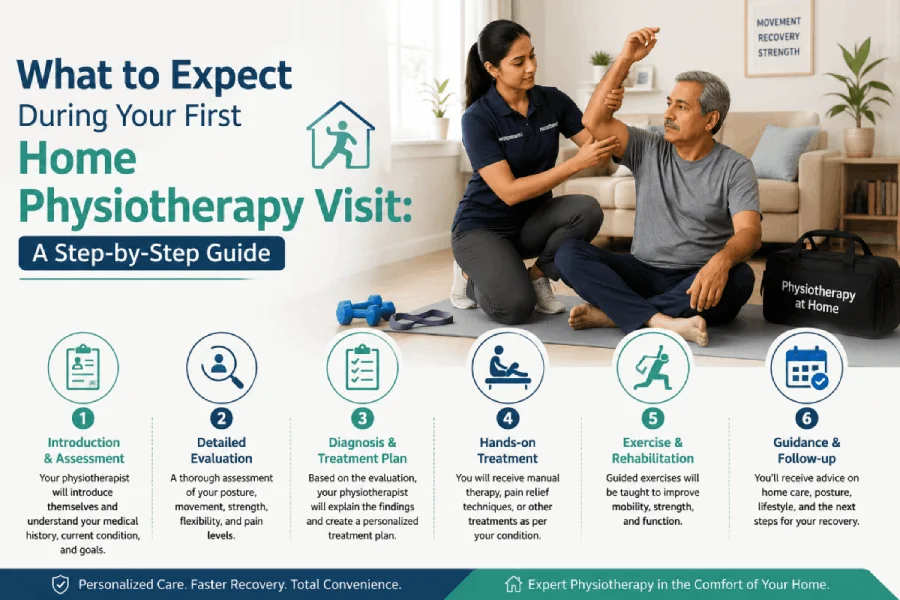
The first visit begins with a thorough patient interview: medical history, current medications, previous physiotherapy experience, functional goals, and pain behaviour. A physical examination follows, tailored to the presenting condition. At the end of the session, the patient receives an explanation of their diagnosis, the treatment plan, the expected trajectory of recovery, and a home exercise programme.
There are no surprises, no mystery, and no rushed consultations. APRC’s physiotherapists take the time that each patient requires — a luxury that outpatient clinic environments rarely afford.
▶ Book Your First Home Visit Physiotherapy Session ◀
The Long-Term Value of a Consistent Physiotherapy Service at Home
Patients who engage with APRC as their regular physiotherapy service at home provider benefit from continuity of care that is impossible to achieve with ad hoc clinic visits. The same therapist visits each time, building a deep understanding of the patient’s history, preferences, and goals. Progress is tracked rigorously. Treatment plans are adjusted in response to objective measurements, not assumptions.
This continuity produces better outcomes. It also produces a healthcare relationship built on trust, which has its own therapeutic value — particularly for elderly patients, neurological patients, and those with chronic conditions who need consistent support and encouragement throughout a demanding recovery journey.