
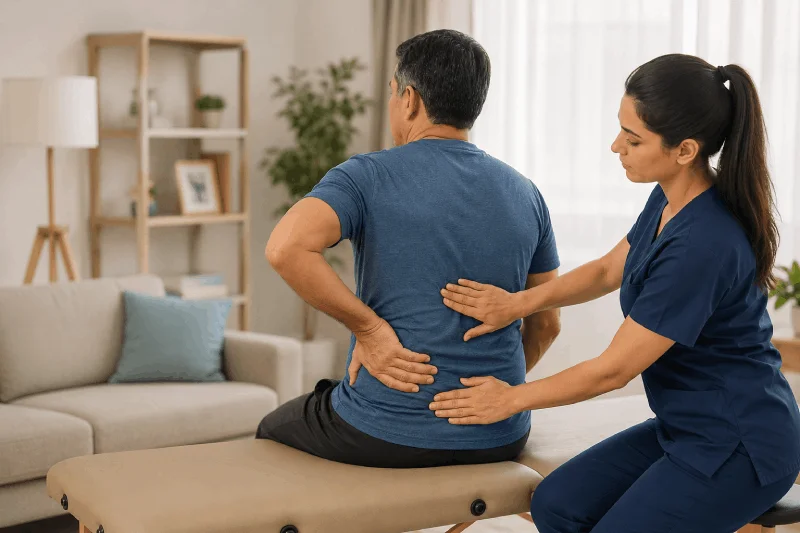
When Back Pain makes travelling to a clinic uncomfortable, maintaining regular treatment can become another challenge. Home-based physiotherapy offers a practical alternative for people who need structured rehabilitation but find clinic visits difficult because of mobility limitations, work commitments, caregiving responsibilities or rigid appointment timings.
This guide explains how personalised home physiotherapy may support people with back-related conditions, what treatment can involve, and how consistent care can make rehabilitation easier to manage.
Physiotherapy for Back Pain: A Personalised Approach
Back pain does not affect every person in the same way. A working professional may experience discomfort after prolonged desk work, while an older adult may have mobility difficulties associated with age-related spinal changes. Someone diagnosed with a disc bulge or sciatica may require a different rehabilitation approach altogether.
For this reason, physiotherapy should begin with an assessment rather than a generic exercise routine. A physiotherapist can consider the individual’s symptoms, movement limitations, medical history and daily activities before developing a suitable treatment plan.
A personalised approach may include:
- Movement and mobility exercises
- Strengthening exercises appropriate to the individual’s condition
- Guidance on posture and everyday movements
- Functional rehabilitation
- Education about safe activity levels
- Monitoring of progress during subsequent sessions
Why Choose Home Physiotherapy for Back Pain?
For many patients, the biggest obstacle is not treatment itself but getting to the clinic consistently. Sitting in a vehicle, arranging transport or depending on a family member can be difficult when movement is already restricted.
Physiotherapy at home for Back Pain brings rehabilitation into the patient’s home environment and can make regular sessions more manageable.
Key practical benefits include:
No Travel Required
Patients do not need to arrange repeated journeys to a clinic. This can be particularly useful for elderly individuals, post-surgery patients and people experiencing considerable difficulty with movement.
Flexible Scheduling
Working professionals with desk jobs may struggle with fixed clinic timings. Flexible home appointments can make it easier to fit rehabilitation around employment and family responsibilities.
Personalised Treatment
Instead of relying on a standard routine, the physiotherapist can adapt the programme according to the individual’s condition, physical ability and rehabilitation goals.
Comfort and Privacy
Some patients are more comfortable discussing their difficulties and performing exercises in familiar surroundings. Home sessions can also make rehabilitation easier for family members or caregivers to observe when their involvement is needed.
Progress Tracking
Regular assessment can help the physiotherapist monitor changes in movement, exercise tolerance and functional ability. The programme can then be adjusted as the patient’s needs change.
Posture Correction Physiotherapy for Desk-Related Back Strain
Long periods at a desk can place considerable demands on the back, particularly when a person’s working setup or movement habits are not suitable for them.
Posture correction physiotherapy can focus on helping patients understand better movement patterns and strengthening or mobility exercises appropriate to their needs. For example, a professional who spends several hours working on a computer may receive guidance on sitting habits, movement breaks and exercises that can be incorporated into their daily routine.
The aim is not simply to tell the patient to “sit straight.” A physiotherapist can assess how the person moves and identify practical changes that are appropriate for their situation.
Supporting Patients With Disc Bulge, Slip Disc and Sciatica
People diagnosed with a disc bulge, herniated disc or sciatica may require carefully selected rehabilitation rather than unsupervised exercises.
Depending on the assessment and medical advice, physiotherapy may form part of a broader conservative treatment plan. Disc bulge treatment through physiotherapy may involve exercises and movement strategies designed around the patient’s symptoms and functional limitations.
Similarly, sciatica physiotherapy at home can be considered for patients who have already received appropriate assessment and require rehabilitation support in a home setting.
Non-Surgical Slip Disc Treatment
Some patients specifically look for non-surgical slip disc treatment because they want to explore conservative management options. Whether non-surgical care is appropriate depends on the individual’s diagnosis, symptoms and medical advice.
Physiotherapy may be included in a conservative rehabilitation programme where clinically appropriate. It should not, however, be presented as a substitute for medical evaluation when symptoms are severe, worsening or associated with concerning neurological changes.
Back Pain Rehabilitation Exercises Should Be Individualised
Exercises found online may not be suitable for every person with back pain. An exercise that is appropriate for one patient may be unsuitable for another depending on the underlying condition, symptoms and physical capacity.
A physiotherapist can demonstrate appropriate back pain rehabilitation exercises, explain correct technique and monitor how the patient responds. The programme can then be progressed or modified according to individual needs.
This can be especially valuable for people recovering after spinal procedures, where rehabilitation needs to follow the treating medical team’s recommendations.
Pain Management Physiotherapy at Home
Persistent discomfort can affect sleep, work, mobility and everyday independence. Patients may also become less active because they are concerned that movement will worsen their symptoms.
Pain management physiotherapy at home can focus on helping the patient understand safe movement, improve physical function and gradually participate in appropriate activities. Treatment should be based on an individual assessment rather than a fixed programme.
For chronic conditions, consistency can be particularly important from a practical perspective. Home sessions may help remove some of the barriers that cause patients to miss appointments or discontinue rehabilitation.
Choosing a Qualified Physiotherapy Provider
Uncertainty about therapist credentials is a common concern when arranging healthcare at home. Patients and families should be able to understand who will provide the treatment and whether the professional has appropriate qualifications and experience for the patient’s needs.
APRC Home Care provides access to certified, RCI-registered therapists, helping patients make an informed decision about home-based care.
Patients should also look for a service that provides:
- An individual assessment
- A personalised treatment plan
- Clear communication about the rehabilitation process
- Regular progress reviews
- Scheduling that accommodates the patient’s routine
- Appropriate coordination with existing medical recommendations when required
When Home Physiotherapy May Be Especially Convenient
Home-based treatment can be particularly practical for:
- Elderly patients who have difficulty arranging transportation
- People recovering after spinal surgery
- Working professionals with limited availability
- Patients experiencing mobility restrictions
- Individuals who prefer treatment in a private home environment
- Family members managing rehabilitation for a dependent relative
For caregivers, avoiding repeated clinic journeys can also reduce the logistical burden of arranging transport and accompanying the patient.
Take the Next Step Towards Structured Back Pain Care
Back pain rehabilitation can be easier to manage when treatment fits into the patient’s routine rather than creating additional travel and scheduling difficulties. Personalised physiotherapy, flexible appointments, qualified therapists and ongoing progress tracking can provide a more structured approach to home-based rehabilitation.
Individuals considering back pain physiotherapy at home can explore whether home treatment is suitable for their condition. Those searching for a physiotherapist for back pain near me can contact APRC Home Care to discuss their requirements and arrange an appropriate assessment.
For patients dealing with back pain, disc-related problems, sciatica or post-surgical rehabilitation, the right physiotherapy plan can help make ongoing care more practical, consistent and personalised.